
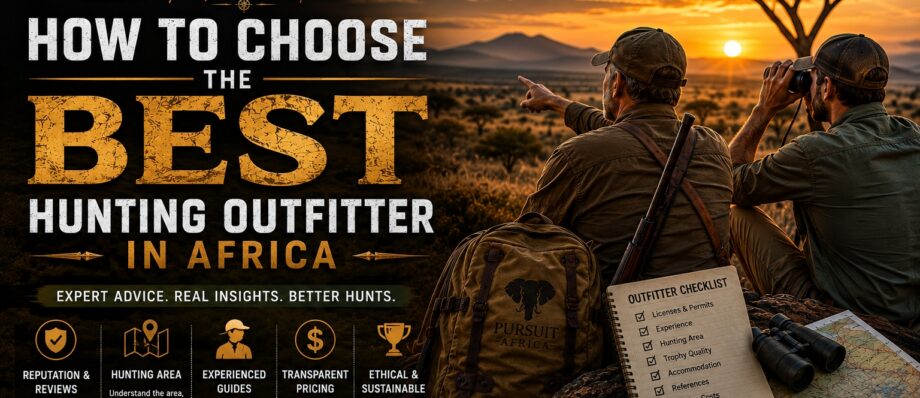
How to Choose the Best Hunting Outfitter in Africa
- July 29, 2026
- Safari Planning
- 8 mins read
How to Choose the Best Hunting Outfitter in Africa
Booking an African hunting safari is something most hunters dream about for years. Whether you’re planning your first plains game hunt in South Africa, tracking buffalo in Zimbabwe, or chasing kudu in Namibia, choosing the right hunting outfitter will determine whether your safari becomes one of the greatest experiences of your life—or one you’ll regret.
The truth is that not every outfitter offers the same level of professionalism, ethics, hunting quality, or customer service. Beautiful websites, social media advertisements, and discounted packages don’t always tell the full story.
This guide explains exactly what experienced hunters look for before booking a safari. By the end, you’ll know how to separate exceptional outfitters from average ones, avoid common mistakes, and confidently book a hunt you’ll remember for all the right reasons.
Why Choosing the Right Outfitter Matters
When you book a hunting safari, you’re not simply paying for an animal.
You’re investing in:
- – Your safety
- – Your hunting experience
- – Your memories
- – Trophy quality
- – Professional guidance
- – Accommodation
- – Food
- – Transportation
- – Trophy handling
- – Taxidermy coordination
- – The overall experience
A great outfitter creates memories you’ll talk about for decades.
A poor outfitter can leave you frustrated, disappointed, or feeling like you’ve wasted thousands of dollars.
Start With Reputation, Not Price
One of the biggest mistakes hunters make is choosing the cheapest package.
Low prices are attractive, especially for first-time hunters. However, extremely cheap hunts often come with hidden compromises.
These may include:
- – Smaller hunting areas
- – Poor trophy quality
- – Inexperienced Professional Hunters
- – Hidden fees
- – Old vehicles
- – Poor accommodation
- – Overhunted properties
- – Limited game numbers
This doesn’t mean expensive outfitters are automatically better.
Instead, look for value rather than the lowest price.
Ask yourself:
“What exactly am I receiving for this price?”
Sometimes paying slightly more results in a dramatically better safari.
Research the Outfitter Thoroughly
Never book after seeing only one Facebook advertisement or Instagram post.
Spend time researching.
Look for:
– Professional website
– Recent hunting reports
– Client testimonials
– Videos of actual hunts
– Trophy galleries
– Google reviews
– Facebook recommendations
– Hunting forum discussions
– Years in business
Consistency over many years is often a better indicator than flashy marketing.
Read Independent Reviews
Not every review on an outfitter’s website is genuine.
Instead, look for reviews across multiple platforms.
Pay attention to comments about:
– Honesty
– Trophy quality
– Communication
– Food
– Accommodation
– Professional Hunters
– Vehicle quality
– Staff friendliness
– Success rates
If several unrelated hunters mention the same issue, take it seriously.
Likewise, repeated praise for the same strengths usually indicates consistency.
Ask for References
One of the simplest ways to evaluate an outfitter is to ask for references from previous clients.
A reputable outfitter should gladly provide contact details for recent hunters.
When speaking to previous clients, ask:
- – Did the safari match what was advertised?
- – Were there unexpected costs?
- – Was the PH knowledgeable?
- – Was the hunting ethical?
- – Would you hunt with them again?
- – Were trophies handled professionally?
- – Did communication remain good after the hunt?
These conversations often reveal details that websites never mention.
Verify Licences and Legal Requirements
Professional outfitters operate legally.
Before booking, confirm:
– Hunting permits
– Outfitter licence
– Professional Hunter licence
– Firearm import assistance
– Export documentation
– CITES knowledge where applicable
Professional operations have nothing to hide.
Understand the Hunting Area
Not all hunting concessions are equal.
Ask:
– How many acres or hectares?
– Is it privately owned?
– Is it leased?
– Is it free-range?
– Is it fenced?
– What species naturally occur there?
– How many hunting parties are present at one time?
Large hunting areas generally provide a more natural hunting experience.
Smaller properties can still produce excellent hunts, but transparency is important.
Free-Range vs High Fence
This topic generates endless debate.
The reality is more balanced than many people believe.
A high fence alone does not automatically mean poor hunting.
Likewise, free-range hunting isn’t automatically better.
What matters most is:
– Size of the property
– Wildlife management
– Animal density
– Hunting pressure
– Ethical practices
A massive conservancy with excellent wildlife management may provide a far more challenging hunt than a small free-range property where animals are accustomed to vehicles.
Judge each operation individually rather than relying on labels.
Trophy Quality
Ask to see recent photographs from the current season.
Not just the best animals harvested over ten years.
Questions include:
– Average trophy sizes
– Success rates
– Age structure
– Hunting methods
– Seasonal variations
A trustworthy outfitter will answer honestly instead of promising unrealistic trophy sizes.
Beware of Guaranteed Giant Trophies
Nobody can guarantee a record-book animal.
Nature doesn’t work that way.
Be cautious if an outfitter promises:
“Guaranteed 60-inch kudu.”
“Every buffalo over 45 inches.”
“100% success.”
These claims should prompt additional questions.
Ethical outfitters explain probabilities rather than making guarantees.
Communication Matters
Communication before booking often predicts communication during your safari.
A professional outfitter should respond clearly and promptly.
Good communication includes:
– Detailed quotations
– Clear contracts
– Hunting information
– Travel advice
– Trophy fee explanations
– Packing lists
– Firearm information
Slow or vague responses before payment rarely improve afterward.
Understand Every Cost
Many misunderstandings happen because hunters don’t ask enough questions.
Know exactly what is included.
Daily rates may include:
– Accommodation
– Meals
– Laundry
– PH services
– Hunting vehicle
– Trackers
– Skinning staff
Additional costs often include:
– Trophy fees
– Taxidermy
– Shipping
– Rifle hire
– Ammunition
– Observer fees
– Gratuities
– Airport transfers
– Extra sightseeing
Request everything in writing.
Ethical Hunting Should Always Come First
Ethics matter.
Ask about:
– Fair chase principles
– Wildlife conservation
– Anti-poaching involvement
– Sustainable quotas
– Community support
– Animal age selection
Ethical outfitters think long-term.
They protect wildlife for future generations rather than maximizing short-term profit.
Evaluate the Professional Hunter
The PH becomes your guide, mentor, teacher and hunting partner.
Experience matters.
An excellent PH should:
– Understand animal behaviour
– Read wind correctly
– Judge trophy quality
– Prioritize safety
– Communicate well
– Stay calm under pressure
– Respect wildlife
– Adapt to your skill level
A patient PH often creates a better safari than someone focused only on harvesting animals.
Hunting Style
Every outfitter hunts differently.
Ask:
– Walk-and-stalk?
– Spot-and-stalk?
– Blind hunting?
– Bow hunting?
– Rifle hunting?
– Tracking dangerous game?
– Mountain hunting?
Choose an outfitter whose style matches your expectations.
Ask About Hunting Pressure
An area hunted every week may produce a completely different experience than one carefully managed.
Questions include:
– Number of hunters annually
– Number of hunting vehicles
– Number of camps
– Rest periods between hunts
Lower hunting pressure generally creates more natural animal behaviour.
Trophy Care
Your safari doesn’t end after the shot.
Professional trophy handling is essential.
Look for:
– Clean skinning facilities
– Experienced skinners
– Proper salting
– Correct tagging
– Reliable taxidermy partnerships
Poor trophy care can ruin months of anticipation.
Accommodation Is About Comfort, Not Luxury
Luxury lodges are wonderful.
But luxury alone doesn’t create a memorable safari.
Many hunters remember:
– Campfire conversations
– Excellent meals
– Friendly staff
– Comfortable beds
– Beautiful scenery
Rather than expensive marble bathrooms.
Safety Standards
Safety should never be compromised.
Professional outfitters should have:
– Medical plans
– First aid kits
– Satellite communication where necessary
– Reliable vehicles
– Experienced dangerous game procedures
Especially on buffalo, lion or elephant hunts.
Beware of These Red Flags
Avoid outfitters who:
– Pressure you into booking immediately
– Demand full payment without documentation
– Avoid answering questions
– Refuse references
– Promise impossible trophies
– Constantly discount hunts
– Have poor communication
– Cannot explain costs clearly
– Frequently change business names
– Have numerous unresolved complaints
Trust your instincts.
If something feels wrong, continue your search.
The Cheapest Safari Often Becomes the Most Expensive
Many experienced hunters eventually discover this lesson.
Saving a small amount upfront may result in:
– Lower trophy quality
– Missed opportunities
– Poor accommodation
– Hidden fees
– Disappointing memories
The value of a well-managed safari lasts far longer than the savings from a bargain hunt.
Questions Every Hunter Should Ask Before Booking
Before paying a deposit, ask:
1. How long have you been operating?
2. Can I speak with previous clients?
3. What is included in the daily rate?
4.Are there hidden fees?
5.How large is the hunting area?
6.Is the hunting free-range or fenced?
7.How many hunters will be in camp?
8.Who will be my Professional Hunter?
9.What is your success rate?
10.What species are available?
11.How are trophies handled?
12.Can you assist with firearm imports?
13.What happens if weather affects hunting?
14.What is your cancellation policy?
15.What payment methods do you accept?
My Perspective After Watching the Industry
One trend has become increasingly clear over the years: the best outfitters rarely need to make extravagant promises.
Their reputation speaks for itself.
They invest in wildlife management, maintain strong relationships with local communities, train professional staff, and focus on giving every hunter an authentic experience rather than simply selling trophies.
Another observation is that successful outfitters tend to be transparent. They explain what is realistic, acknowledge the challenges of hunting, and set expectations honestly. That openness builds trust long before a hunter arrives in camp.
Conversely, be cautious of businesses that rely heavily on unrealistic guarantees, constant “limited-time” offers, or pressure to book immediately. A reputable outfitter knows that informed hunters appreciate honesty more than sales tactics.
The finest safaris are often remembered not because the trophy scored a few extra inches, but because of the entire experience—the early mornings, the trackers reading the ground, the excitement of a careful stalk, the camaraderie around the campfire, and the respect shown to the wildlife and the land.
Final Thoughts
Choosing a hunting outfitter is one of the most important decisions you’ll make before travelling to Africa.
Take your time.
Research thoroughly.
Ask questions.
Compare multiple outfitters.
Read independent reviews.
Speak to previous clients.
Understand every cost.
Most importantly, choose an outfitter whose values match your own.
An ethical, experienced outfitter will do far more than help you harvest an animal. They will introduce you to Africa, share generations of knowledge, and create memories that last a lifetime.
A successful safari isn’t measured only by the trophies on your wall. It’s measured by the stories you tell, the friendships you make, and the respect you gain for Africa’s wildlife and wild places.
If you choose wisely, your first safari may become the beginning of a lifelong passion for hunting in Africa.
Frequently Asked Questions (FAQ)
How do I know if a hunting outfitter is reputable?
Research independent reviews, ask for client references, verify licences, and look for consistent communication and transparent pricing.
Should I choose the cheapest hunting package?
Not necessarily. Focus on value, experience, ethics, and reputation rather than the lowest advertised price.
Is fenced hunting unethical?
Not always. The size of the property, wildlife management, hunting pressure, and ethical practices are far more important than whether a property is fenced.
What should be included in a hunting safari quote?
A detailed quote should clearly list daily rates, trophy fees, accommodation, meals, transport, hunting services, and all additional costs.
How far in advance should I book an African hunting safari?
Many sought-after outfitters are booked 12 to 24 months in advance, especially for dangerous game and prime hunting dates.