

Top 5 Animals to Hunt in South Africa
1. Cape Buffalo – The Ultimate Test of the Hunter
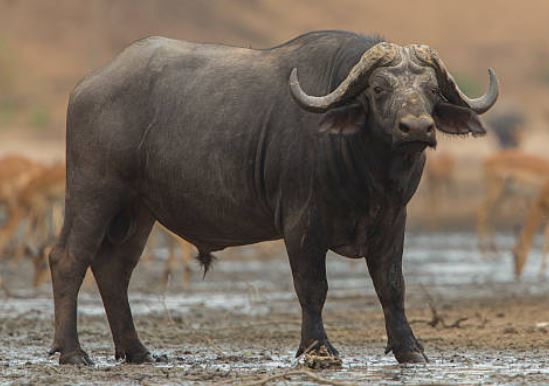
Cape buffalo are in a completely different category from the plains game on this list.
A mature buffalo bull is an enormous, powerful animal capable of disappearing into thick cover surprisingly quickly. Hunting one successfully requires more than simply being able to shoot accurately. Reading tracks, understanding the wind, judging the terrain and listening to an experienced Professional Hunter can all make the difference.
Buffalo hunting is often a game of patience.
A hunter may spend hours following tracks before finally finding the herd or an old bull. Thick bush can make visibility extremely limited, while the buffalo themselves can cover considerable ground.
And once a shot is taken, the hunt may only be beginning.
Where can you hunt Cape Buffalo in South Africa?
Cape buffalo are available on selected hunting properties and concessions, particularly in:
Limpopo
Eastern Cape
Mpumalanga
KwaZulu-Natal
Availability and hunting conditions vary considerably between properties. Limpopo is particularly associated with buffalo hunting, while selected Eastern Cape operations also offer buffalo hunts.
What makes buffalo hunting difficult?
The biggest challenge is often finding and approaching the right animal in the right conditions.
Thick vegetation can make tracking difficult, while buffalo can be extremely alert to human presence. Following a wounded buffalo also introduces serious risk, which is why buffalo hunting should only be undertaken with an appropriately experienced Professional Hunter and according to local regulations.
Recommended rifle and caliber
For Cape buffalo, the commonly recommended choice is a .375 H&H Magnum or larger, subject to the applicable provincial regulations and the outfitter’s requirements.
Popular options include:
.375 H&H Magnum
.375 Ruger
.404 Jeffery
.416 Rigby
The .375 H&H remains one of the classic all-round dangerous-game cartridges and is widely used for buffalo.
Estimated 2026 trophy fee
Expect approximately US$9,500–US$16,000+ for a Cape buffalo, depending heavily on trophy size, property and outfitter.
Published 2026 South African price lists currently show examples ranging from around $9,500 to $13,950 and higher for larger bulls.
Important: This is the trophy fee only. Daily hunting rates, accommodation, transport, permits, taxidermy and other safari costs are generally additional.
2. Eland – Hunting One of Africa’s Giants
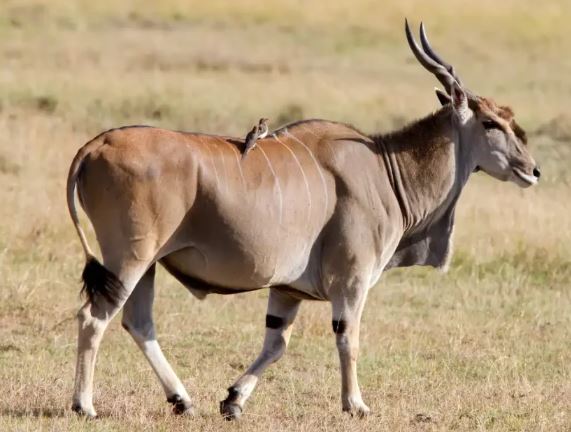
The Eland is one of Africa’s largest antelope and can be an extremely demanding animal to hunt.
What makes an eland interesting is that its size can be deceptive. Seeing a large bull standing in the distance can make the animal appear easy to approach. Once the stalk begins, however, hunters quickly discover how difficult it can be to close the distance.
Eland are powerful animals capable of covering considerable ground, and terrain can make an already difficult stalk even harder.
Where can you hunt Eland?
Eland are hunted across several South African provinces, including:
- Limpopo
- Eastern Cape
- Free State
- Northern Cape
- North West
- Western Cape
Different areas offer very different hunting experiences. Open-country eland hunting can involve long-distance glassing and careful stalking, while bushveld hunting can require hunters to work much closer to animals in cover. South African hunting operations currently advertise eland hunts across several of these provinces.
What makes eland hunting difficult?
The combination of size, endurance and terrain is the real challenge.
A hunter may have to cover substantial ground before getting into shooting position. In open country, the challenge may be judging distance and using available cover. In thicker bush, finding a mature bull can be the difficult part.
A successful eland hunt is therefore as much about hunting strategy as marksmanship.
Recommended rifle and calibre
A suitable medium-to-heavy plains-game rifle is generally appropriate.
Popular choices include:
- .30-06 Springfield
- .300 Winchester Magnum
- 7mm Remington Magnum
- 9.3×62
- .375 H&H Magnum
A .30-06 with an appropriate premium bullet is capable of handling large plains game, including eland, when used appropriately and where legal.
Estimated 2026 trophy fee
A reasonable current estimate is approximately US$2,750–US$6,000, depending on species/subspecies, trophy quality and outfitter.
Current published examples include Cape eland around $2,750–$4,000 and Livingstone eland around $5,200–$5,950.
3. Gemsbok – Built for the Hard Country
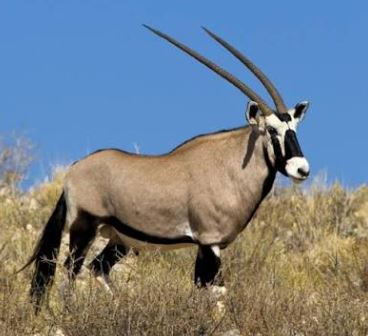
Few African antelope look as perfectly designed for harsh country as the Gemsbok.
With its long, straight horns, powerful body and striking black-and-white markings, the gemsbok is one of the most recognisable African plains-game species.
But its appearance is not the only reason it makes our list.
Gemsbok are incredibly well adapted to dry environments. They can live in areas where water is limited and are capable of covering substantial distances.
That makes a gemsbok hunt very different from hunting in thick bushveld.
Where can you hunt Gemsbok?
Gemsbok are commonly hunted in:
- Northern Cape
- Free State
- North West
- Eastern Cape
- Western Cape
- Limpopo
They have also been introduced onto suitable private game properties outside their historical distribution. The Northern Cape and arid western regions remain particularly associated with gemsbok hunting.
What makes gemsbok hunting difficult?
Distance and country.
A gemsbok can be spotted at considerable range in open terrain, but seeing an animal does not mean you are anywhere close to being able to take a shot.
The hunter may have to:
- Judge distance correctly
- Use the terrain and vegetation
- Manage the wind
- Make a long stalk
- Remain patient
- Be prepared for difficult shooting positions
In the Kalahari and other dry areas, heat and walking through sand can also make the physical side of the hunt demanding.
Recommended rifle and caliber
Good plains-game choices include:
- .270 Winchester
- 7mm Remington Magnum
- .30-06 Springfield
- .300 Winchester Magnum
- .308 Winchester, where appropriate
A .30-06 with a suitable premium hunting bullet is a particularly versatile choice for gemsbok and other medium-to-large plains game.
Estimated 2026 trophy fee
A typical current estimate is approximately US$1,600–US$3,000 for a standard gemsbok, with exceptional colour variants or trophy animals considerably higher.
Published 2026 examples include approximately $1,650, $1,950, $2,150 and $2,950 depending on outfitter and location.
4. Greater Kudu – The Grey Ghost
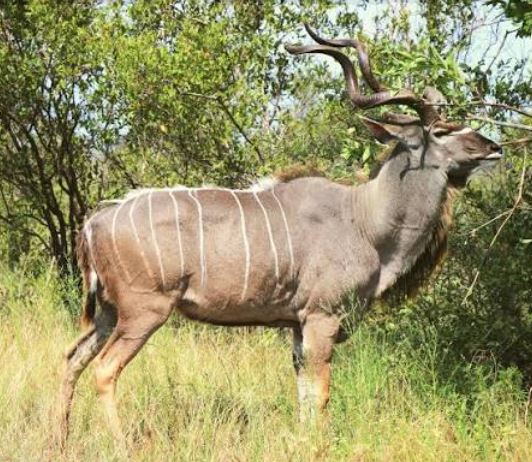
If there is one animal that can make an experienced hunter question whether he actually saw what he thought he saw, it is the Kudu.
The greater kudu has earned its reputation as the “Grey Ghost” for good reason.
A mature bull can stand only a short distance away and seemingly disappear into the bush.
Kudu hunting is not necessarily about taking the longest shot or walking the greatest distance. It is about observation, patience, movement and understanding the terrain.
Where can you hunt Kudu?
Greater kudu are widespread across South Africa and can be hunted in many provinces, including:
- Limpopo
- Mpumalanga
- North West
- Northern Cape
- KwaZulu-Natal
- Eastern Cape
- Free State
- Western Cape
Their distribution varies between regions and kudu populations can differ considerably in appearance, body size and horn characteristics.
What makes kudu hunting difficult?
Kudu are masters of their environment.
Their colouring blends into the bush, and mature bulls can remain motionless while the hunter searches for them.
The challenge is often getting close enough to identify the bull, determine the trophy quality and find a safe shooting opportunity.
In thick bushveld, the first problem may simply be seeing the animal clearly.
Recommended rifle and caliber
Popular choices include:
- .270 Winchester
- 7mm Remington Magnum
- .30-06 Springfield
- .300 Winchester Magnum
- 9.3×62
The .30-06 is a particularly versatile option for kudu and other large plains game.
Estimated 2026 trophy fee
A reasonable estimate for a standard greater kudu is approximately US$3,250–US$6,000, with larger trophy bulls potentially costing considerably more.
Published 2026 prices show examples ranging from around $3,250 for kudu up to 55 inches to around $5,950 for larger animals. Other outfitters list animals above 55 inches at approximately $5,950 or higher.
5. Blue Wildebeest – The Tough Antelope That Doesn’t Look It
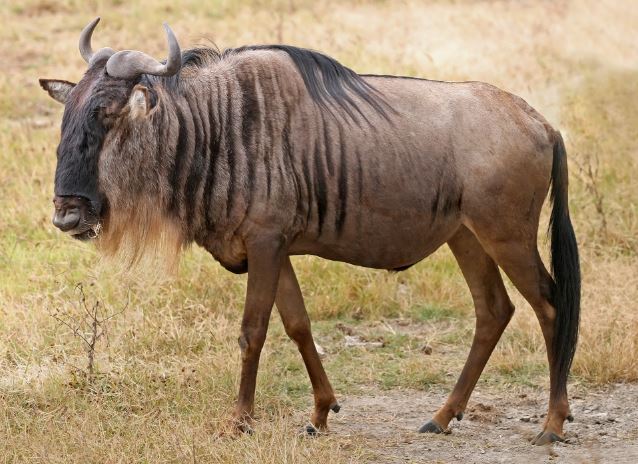
The Blue Wildebeest may not have the imposing horns of a buffalo or the legendary reputation of a kudu, but underestimate one and the hunt can quickly become difficult.
Blue wildebeest are strong, alert animals that can cover ground quickly.
Their eyesight and awareness can make stalking them challenging, particularly in open country.
Where can you hunt Blue Wildebeest?
Blue wildebeest are widely hunted in South Africa, including areas of:
- Limpopo
- North West
- Free State
- Mpumalanga
- Eastern Cape
- Northern Cape
The species occurs across a broad range of South African hunting properties, with different terrain creating very different hunting conditions. Current South African outfitter price lists advertise blue wildebeest hunts in multiple regions.
What makes blue wildebeest hunting difficult?
Blue wildebeest are often hunted in open or semi-open country.
That creates a problem for the hunter:
There may simply be nowhere to hide.
Getting within a comfortable shooting distance can require using small rises, bushes, drainage lines and changes in terrain to remain concealed.
They can also be extremely alert to movement, making the final part of the stalk particularly important.
Recommended rifle and caliber
Good options include:
- .270 Winchester
- 7mm Remington Magnum
- .30-06 Springfield
- .308 Winchester
- .300 Winchester Magnum
The .30-06 is a proven all-round option for blue wildebeest when paired with an appropriate hunting bullet and used within the hunter’s capabilities.
Estimated 2026 trophy fee
Expect roughly US$1,250–US$1,900 for a standard blue wildebeest, although prices vary between properties and trophy specifications.
Published 2026 price lists currently show examples from approximately $1,250 to $1,850, with some operations charging more.